A design can work as intended and still fail the person using it.
The problem may not be a broken feature. It may be a mismatch between how something was designed to work and the circumstances in which it is actually used.
Tracing is a way to find those mismatches.
Start by understanding why the activity matters. What is the person trying to accomplish? What do they do today? What did they do before, why did they change, and what did they expect would improve?
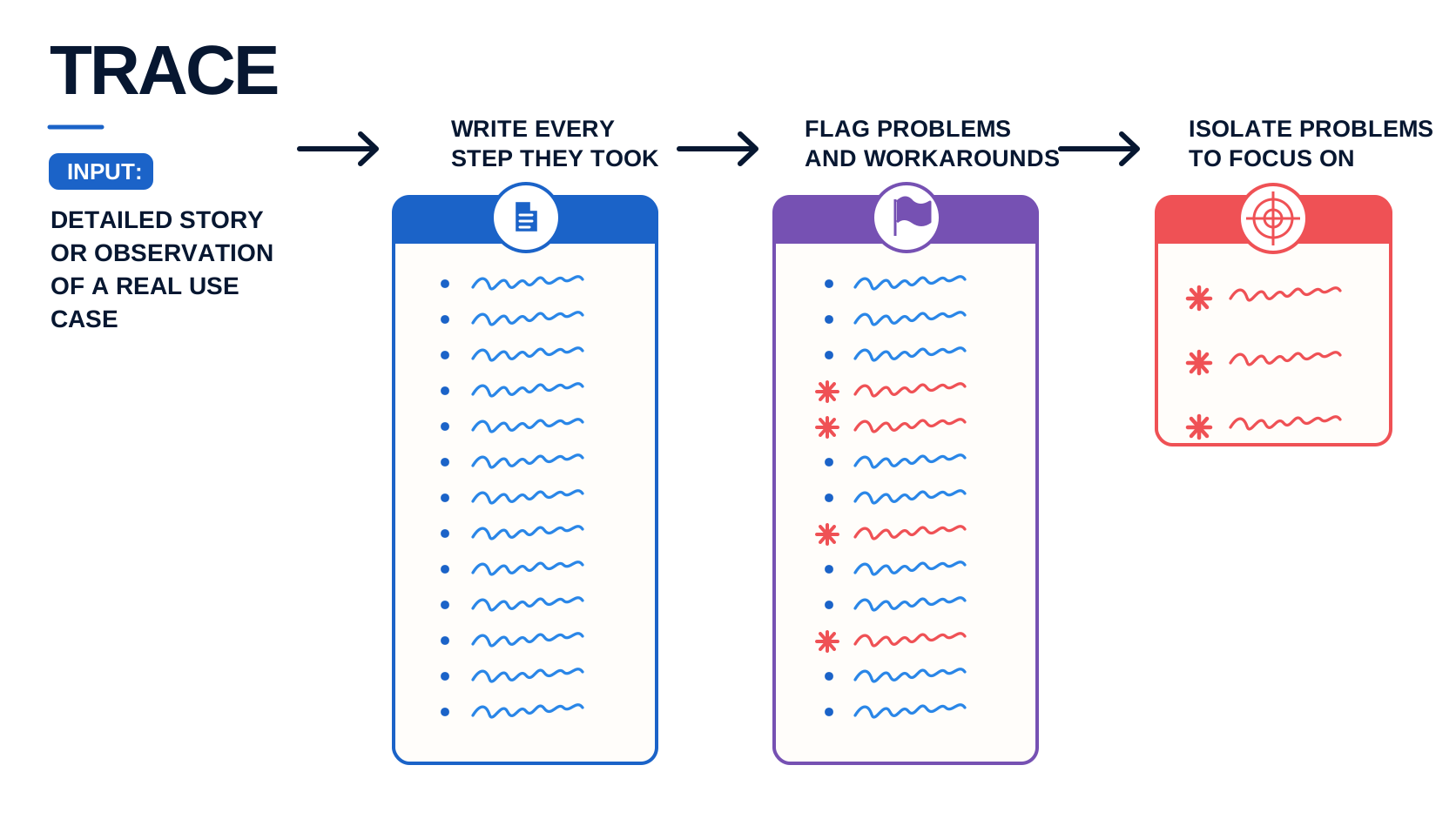
TRACE: from a real use case to the problems worth focusing on.
Then follow a real attempt from beginning to end. Record what happened, including what happened outside the product: switching tools, searching for information, asking for help, repeating work, or abandoning the task.
Pay particular attention to workarounds.
A workaround is evidence that someone is adapting the system to their circumstances. Understanding what they're trying to preserve, avoid, or accomplish can reveal what the existing design fails to accommodate.
Even doing nothing can be worth tracing. Someone who repeatedly postpones making a budget may be managing the problem through avoidance, memory, and other compensating behaviors. Those behaviors are part of the experience, too.
But a trace does not tell you what to build.
It gives you evidence of where the current form may not fit. You still have to understand the causes, distinguish consequential problems from incidental friction, and decide which changes would improve the whole.
The purpose isn't to find every problem. It's to find where a change would matter.