The Unvarnished Truth
Reclaiming Discourse
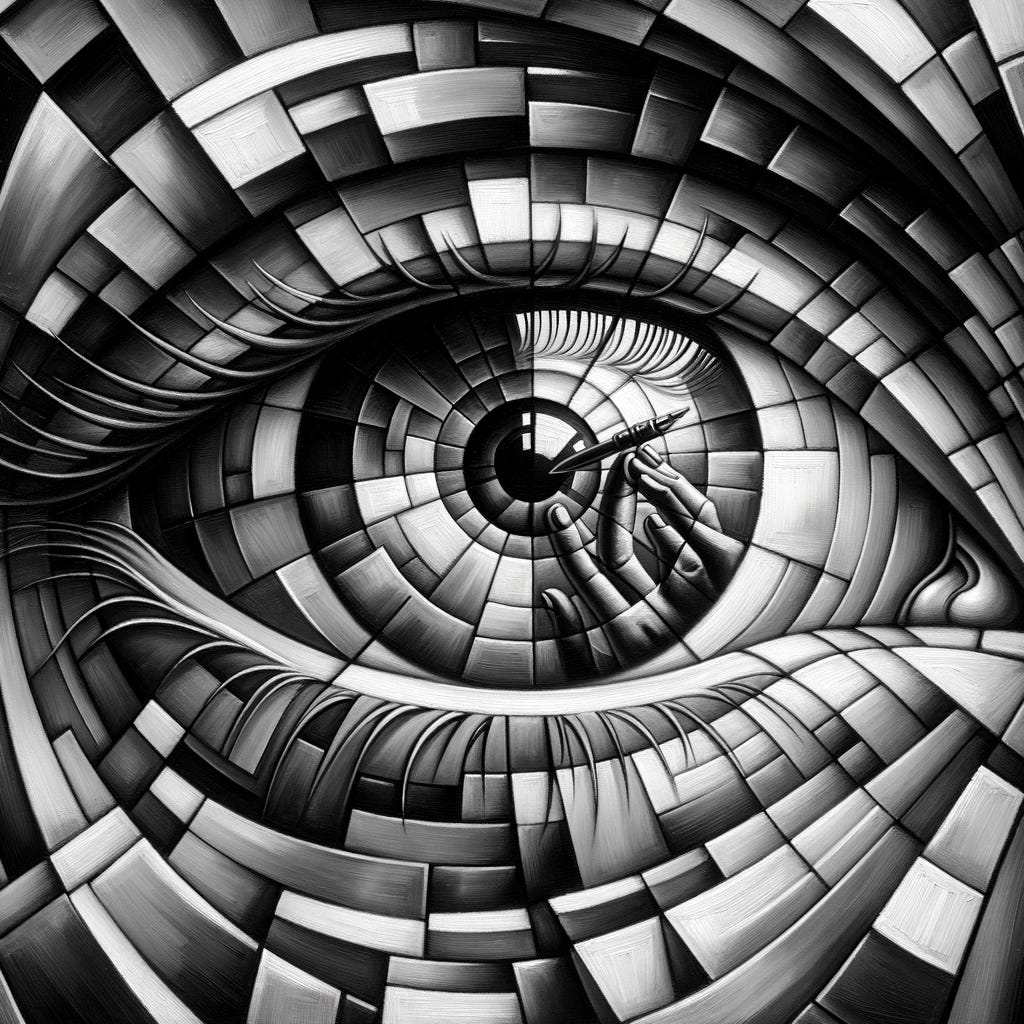
In an age of universal deceit, the currency of the truth becomes a revolutionary act. We have entered into a tacit agreement, a kind of collective conspiracy where the currency is not gold but ideas, and among these ideas, there is an insidious stratification that we are encouraged to ignore.
The party line, increasingly, is one of an enforced egalitarianism of belief, where all ideas demand equal respect, equal time on the stage. However, some of these ideas are the very antithesis of sensible thought. They are the weeds in the garden of discourse, and though it may seem a brutal act to uproot them, it is a necessary one.
Political correctness has grown from a well-meaning doctrine of politeness into a hammer used to shape the thoughts of the population. It dictates not only the language we use to communicate but also the thoughts that are permissible to entertain. It is a form of Newspeak, designed to narrow the range of thought, to make certain avenues of intellectual exploration not only forbidden but unthinkable.
The consequence of this is that we are asked to place the preposterous on the same pedestal as the profound. To question, to probe, to use the scalpel of logic to dissect an idea is now tantamount to a thoughtcrime. It is here that we witness the death of discourse, the asphyxiation of the intellect in the name of a spurious harmony.
Within our communities, the seeds of nonsense have been sown with a reckless abandon. From the pulpits of our institutions, we are fed a diet of absurdities. The dogmas of alternative medicine, the bizarre tenets of fringe cults, the unfounded assertions of pseudoscience are all entertained with a solemn nod. To challenge these is to run afoul of the prevailing orthodoxy, to risk being declared a heretic.
And yet, the task before us is clear. We must not shrink from the karma of conflict, the essential discord of true argument. To slash through the thicket of falsehoods, to lay low the towering follies of our time is not a breach of politeness but an act of intellectual hygiene. It is the necessary work to prepare the ground for a society based not on the comforting lie but the uncomfortable truth.
For it is only when we are willing to declare that the emperor is wearing no clothes, to scorn the foolish without fear of reprimand, that we can begin the labor of building something enduring. The energies of our society are being squandered in the pursuit of phantoms, in the endless repetition of debunked theories. We have become marginal, not through our exclusion from the world of serious consideration, but through our own failure to exclude the trivial and the false.
To speak plainly then: it is time to call folly by its name, to be impolite where politeness serves as a gag. We must rediscover the virtue of the honest 'no', the sane and simple refusal to accept the baseless as the basis for a world yet to come.