I helped turn ocean freight from information into action.
I joined NYSHEX to build the product function and turn a complex freight workflow into enterprise software. My focus was simple: make the state of a shipment legible enough that people could decide what to do next.
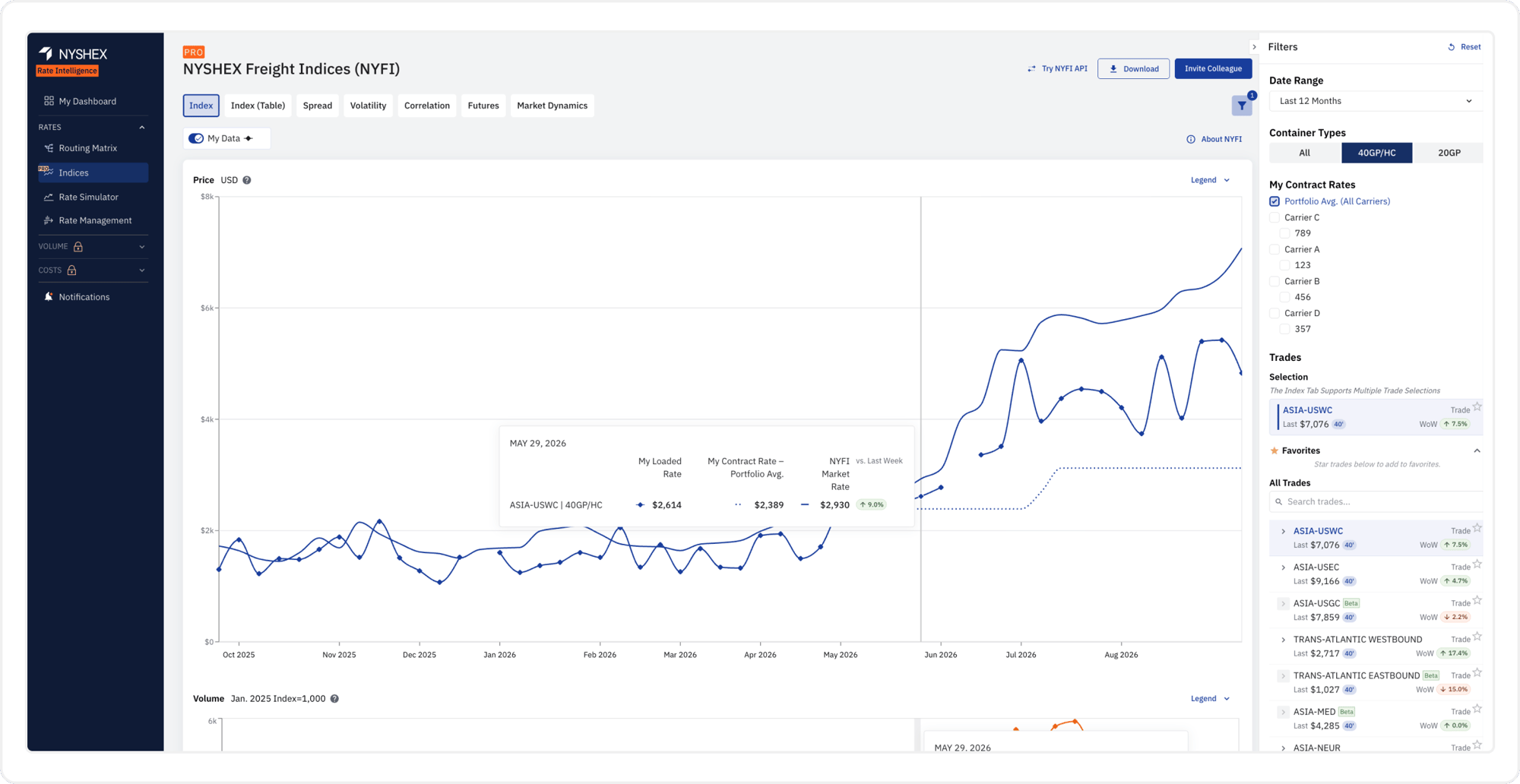
The problem wasn’t missing data. It was missing decision state.
Freight teams were reconciling contracts, rates, schedules, capacity, and execution across documents and systems. I framed the opportunity around the moments where that fragmentation forced someone to stop, interpret, and chase the next answer.
The decision came first.
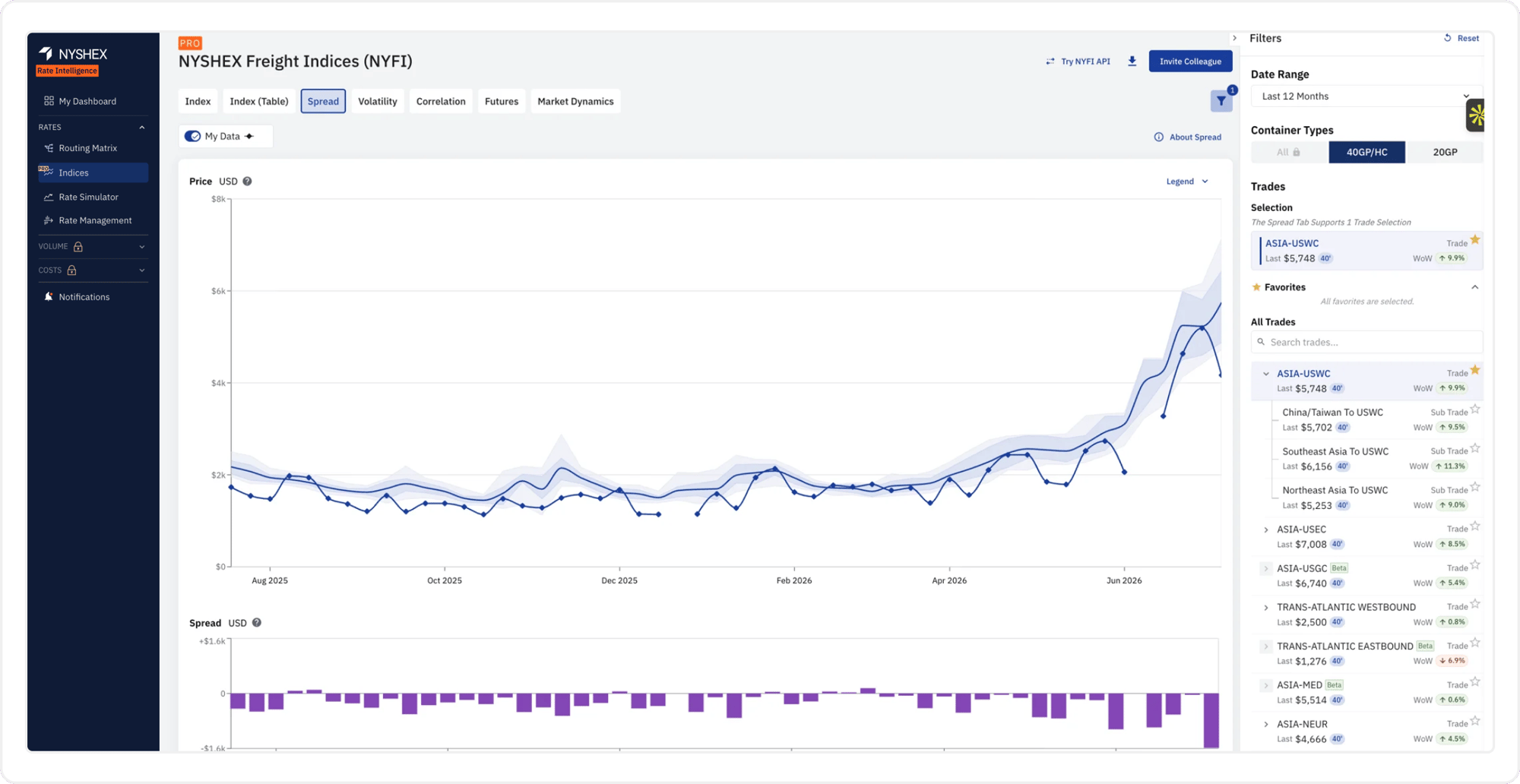
The current Rate Intelligence interface is a later expression of the same category problem. I use it here to make my product logic concrete: first make the state trustworthy, then make the choice legible, then test whether the product changes what someone can do.
First, remove the interpretation work.
My bias was to turn freight information into a product state someone could trust, rather than leave the user to reconcile documents and spreadsheets before every decision.
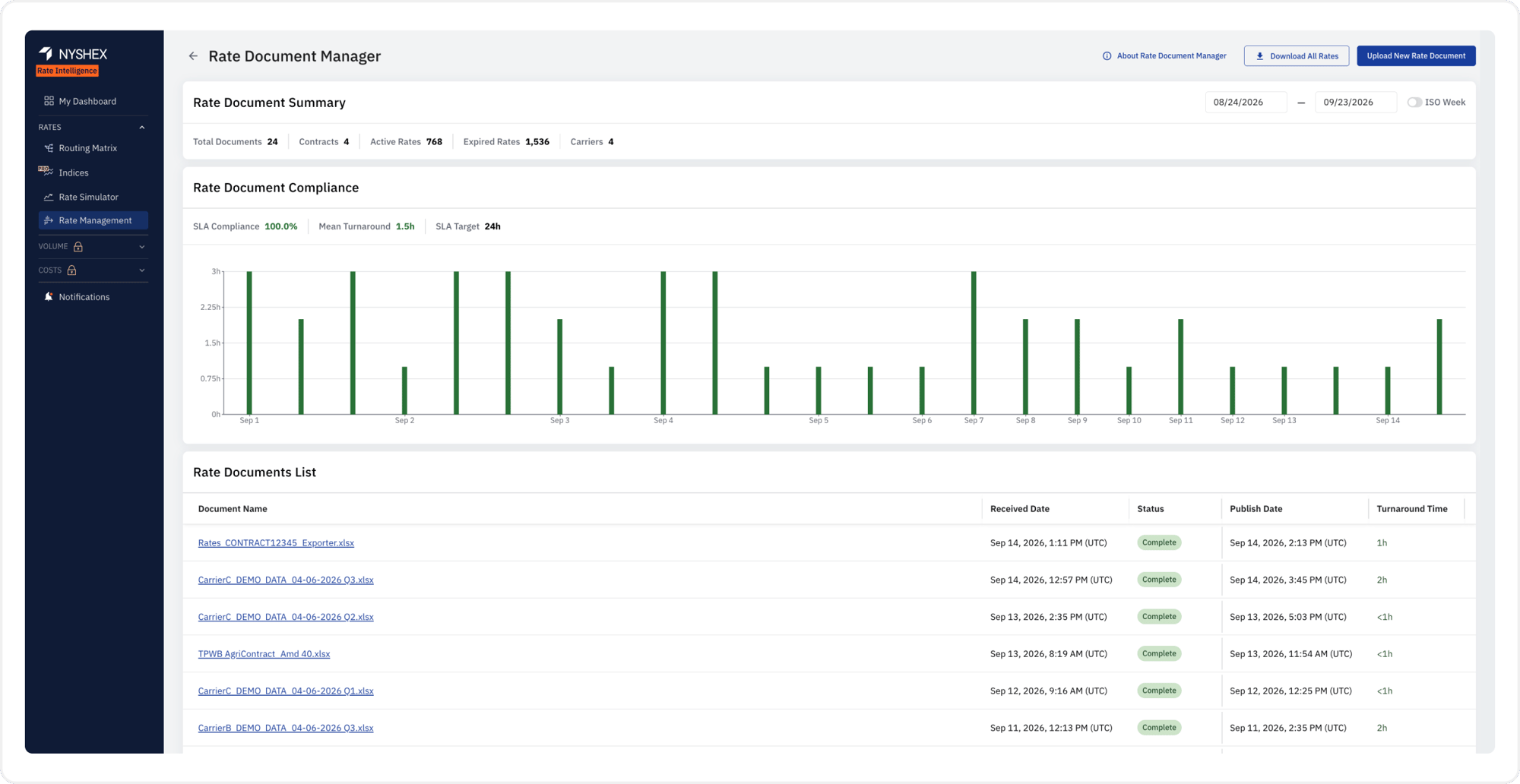
The variables belonged in one decision surface.
A cheap rate is not useful if the route, schedule, or execution state makes it unusable. I pushed toward decision surfaces that brought the variables that mattered into the same view.
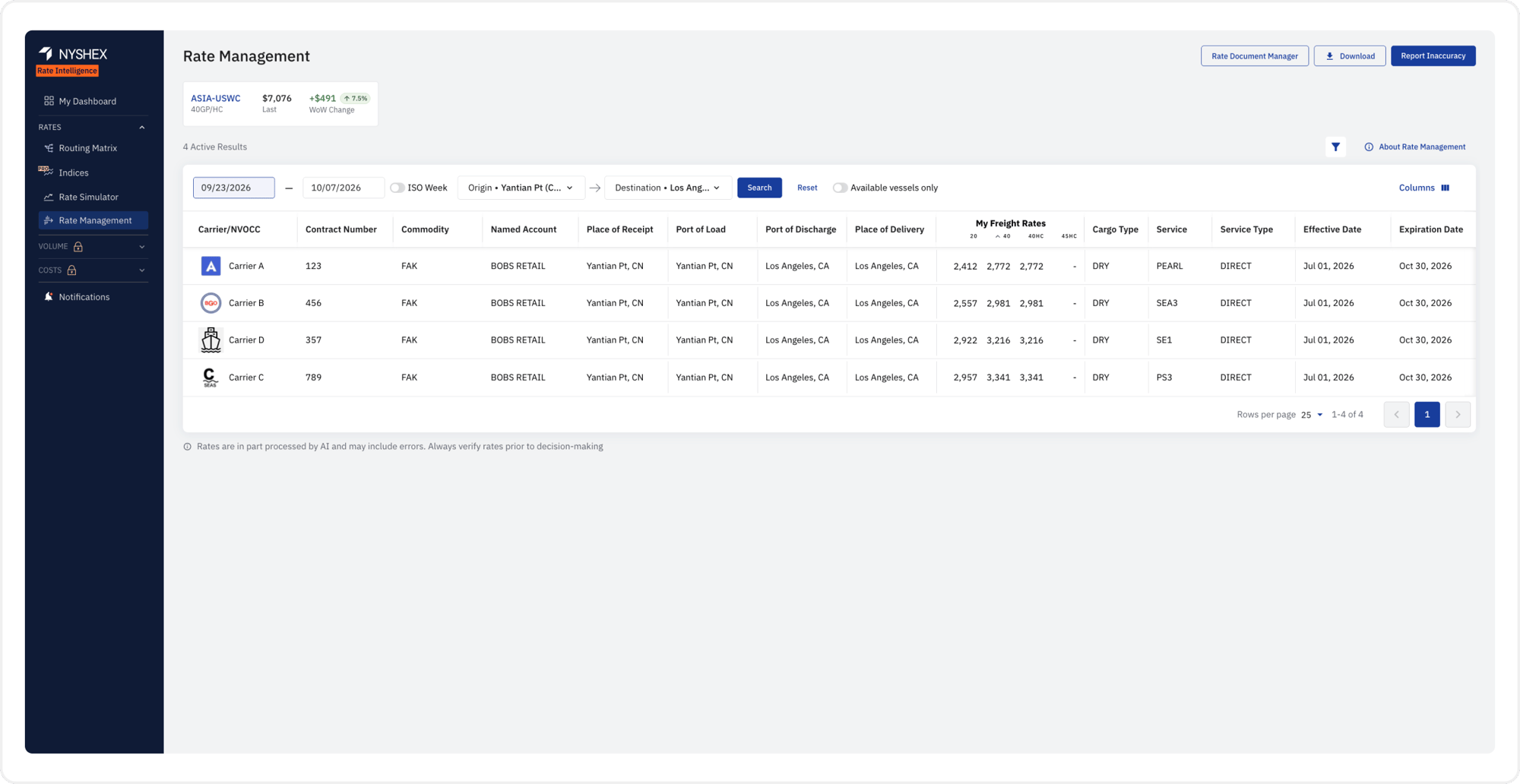
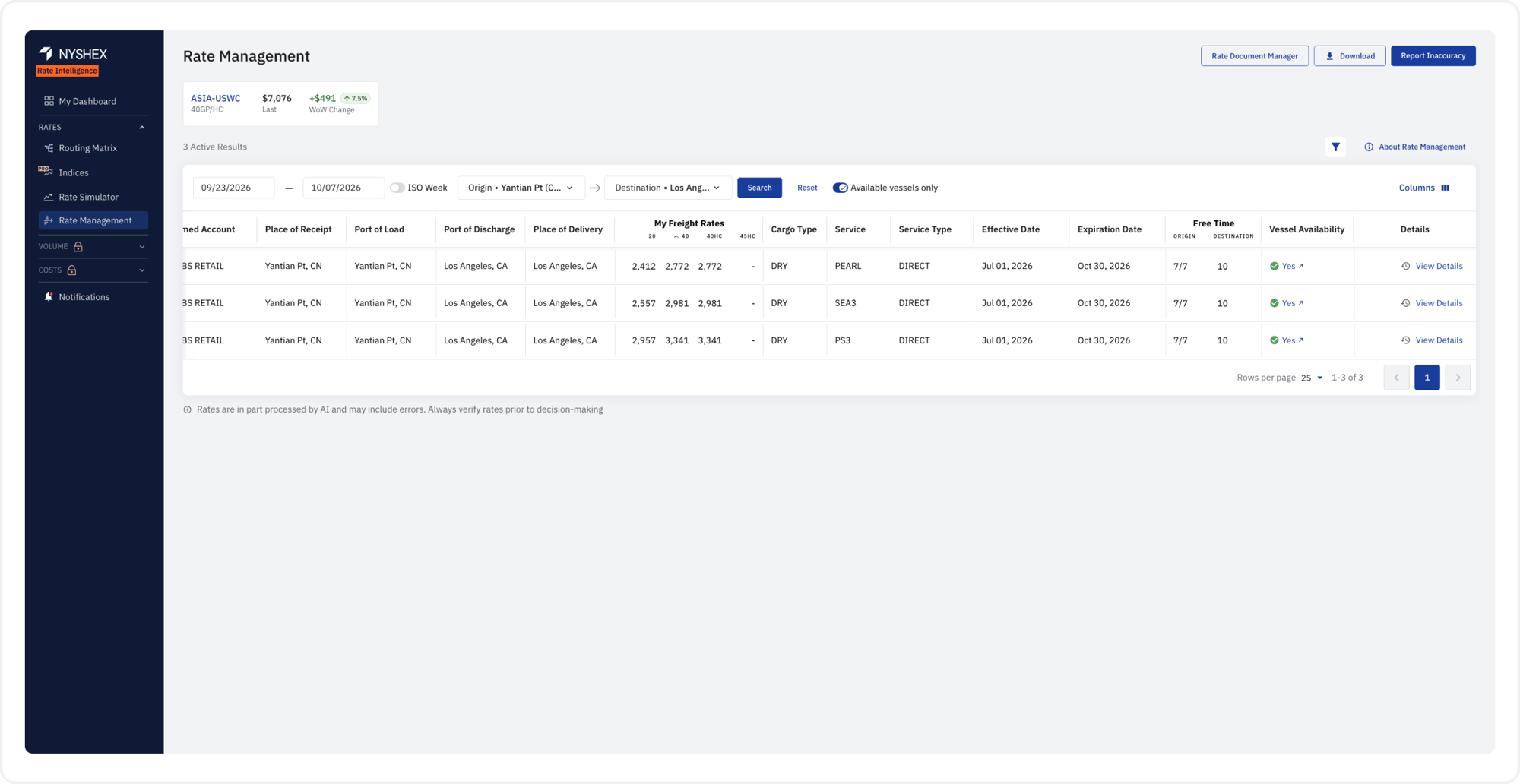
Design for attention, not coverage.
For the port-to-port tracking product I shipped, the point was not to reproduce every piece of shipment data. It was to make movement and exceptions visible enough that a member could see what required attention across the journey.
Building the product—and the product function.
I joined as VP of Product Management, grew the product team from zero to ten, and led the build and launch of enterprise freight products. The work was equal parts product strategy, shaping, team building, and turning customer complexity into something reusable.
What I shipped
I shipped a port-to-port tracking product that gave members a clearer view of freight movement across the journey. More broadly, I helped turn enterprise freight workflows into products that could be sold repeatedly rather than solved as one-off operations.
Enterprise software gets better when you design the decision, not the database.
The durable lesson for me was that visibility alone is not the product. The product is the judgment it makes easier: what state am I in, what changed, and what should I do next?
See NYSHEX today ↗